Chemist Find
· Editor · Services · 5 min read
Clinical review: pending
Emergency contraception at a pharmacy: what to expect
The morning-after pill is available from any Australian pharmacy without a prescription. Here is how the options compare, what the pharmacist will ask, and your rights at the counter.
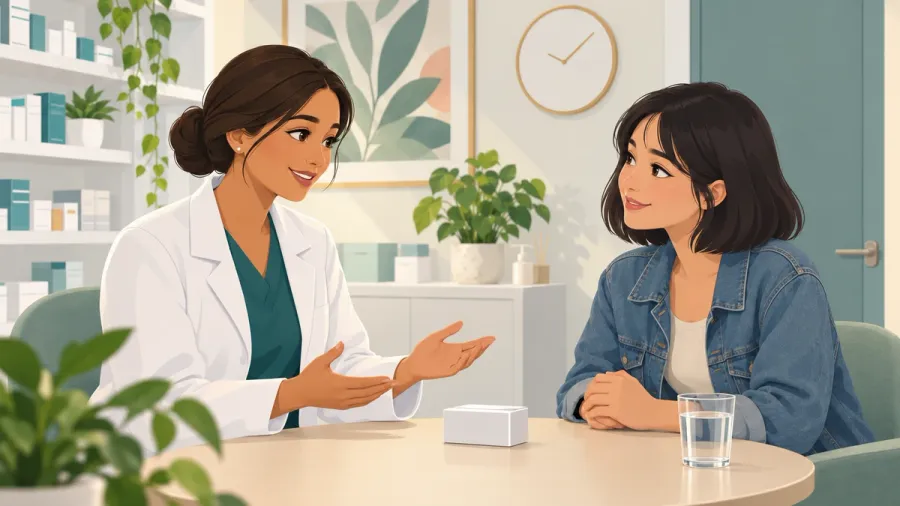
A condom broke, you missed pills, or you did not use contraception. Emergency contraception can prevent pregnancy if you use it soon enough, and in Australia you can get the emergency contraceptive pill, often called the morning-after pill, from a pharmacy without a prescription.
Many people feel anxious walking up to the counter to ask for it. Knowing what to expect makes it easier. This guide covers the options, the time limits, what the pharmacist will ask and why, and what to do afterwards.
The options and how long you have
There are two emergency contraceptive pills and one device:
| Option | When it works | Where to get it |
|---|---|---|
| Levonorgestrel pill | Approved for use within 72 hours (3 days); may have some effect up to 96 hours | Pharmacy, no prescription |
| Ulipristal acetate pill | Up to 120 hours (5 days); more effective than levonorgestrel, especially after 3 days | Pharmacy, no prescription |
| Copper IUD | Within 5 days; over 99% effective | Fitted by a trained doctor or nurse |
Both pills work best the sooner you take them, ideally within 24 hours. Taken in time, they prevent about 85% of expected pregnancies. Do not take both kinds of pill in the same cycle. The copper IUD is the most effective option and also gives you ongoing contraception, but it needs an appointment with a trained clinician.
Not every pharmacy stocks ulipristal. Nearly all stock levonorgestrel, but only about 70% stock ulipristal, so if you are past three days or want the more effective pill, phone ahead.
You do not need a prescription, and there is no age limit
Both emergency contraceptive pills are Pharmacist Only medicines. You do not need a prescription, and they can legally be supplied to people of any age in every state and territory. For younger people, the pharmacist will check that you understand the decision, and the conversation stays confidential.
The pills are not on the PBS. Expect to pay roughly $15 to $30 for levonorgestrel and $30 to $50 for ulipristal, depending on the pharmacy.
What the pharmacist will ask, and why
You will usually be taken somewhere private for a short conversation. The pharmacist needs to work out which option suits you, so they will typically ask:
- how many hours ago you had unprotected sex;
- what contraception you usually use, if any;
- when your last period started;
- what other medicines you take, including herbal products;
- about any medical conditions.
These questions matter. Some medicines, including certain epilepsy medicines, the antibiotic rifampicin, some HIV medicines and St John’s wort, can make the pills less effective. Body weight can also change which option works best, so the pharmacist may ask about it. Answer honestly; it helps them give you the option most likely to work.
The Royal Women’s Hospital in Melbourne says a pharmacist should not ask about your partner, your parents or your religion, and should not pass your information to family or teachers.
Buying it for someone else
You can buy emergency contraception for someone else, such as a partner. Pharmacy guidance says supply to a third party is allowed. The pharmacist will still ask the same questions, may want to speak with the person who will take it, and needs to be confident it is that person’s own decision.
If a pharmacist will not supply it
A pharmacist can decline to provide a service because of their own moral or religious beliefs. Under the code of conduct for pharmacists, though, they must not let that stop you getting care. They should tell you about their objection and make sure you have another option, such as another pharmacist on shift or another pharmacy nearby. If you are turned away without help, go straight to another pharmacy, because time matters.
After you take it
- If you vomit within about three hours of taking the pill, go back to the pharmacist, as you may need another dose.
- Your next period may come early, on time or late.
- Take a pregnancy test if your period is more than a week late, or is unusually light or different.
- Restarting contraception: after levonorgestrel, you can usually restart or continue your regular hormonal contraception straight away, using condoms for the next seven days. After ulipristal, wait five days before starting hormonal contraception, and use condoms in the meantime. The pharmacist will explain what applies to you.
- Sexually transmitted infections: emergency contraception does not protect against STIs, so consider getting tested.
If you are breastfeeding, tell the pharmacist; they can advise which option suits you.
Practical Example: A 24-year-old in Adelaide realises on Monday morning that she missed two of her contraceptive pills before a weekend away. It is now about 60 hours since she had sex. She uses search for pharmacies to find one open nearby, and in a private consultation the pharmacist explains that both pills are still an option but ulipristal is more effective at this point. After checking her other medicines, the pharmacist supplies it, explains how to restart her regular pill and use condoms in the meantime, and suggests a pregnancy test if her period is more than a week late.
Planning ahead
If you would like a backup at home, your GP can write a prescription in advance, or you can buy the pill from a pharmacy before you need it. If missed pills are a regular problem, a pharmacist or GP can talk you through longer-acting methods. Many pharmacies can resupply your contraceptive pill, and in some states pharmacists can start you on hormonal contraception. See our guide to renewing your pill at a pharmacy and what pharmacists can treat in your state.
Official sources to check
- Healthdirect: the morning-after pill
- Australian Prescriber: emergency contraception, an overview
- The Royal Women’s Hospital: getting emergency contraception from a pharmacy
- Family Planning NSW: emergency contraception
- SHINE SA: emergency contraception
In Victoria, 1800 My Options (1800 696 784) gives confidential information on contraception and sexual health. Elsewhere, a sexual health clinic or family planning service can help. Emergency contraception works best the sooner you take it, so do not wait.